Conversational Care
Hackathon 2026
A facilitator's complete guide — from team onboarding and sensor-data ideation to AI-assisted empathy workshops and prototype delivery, grounded in Harmony Village's real aging-care context.
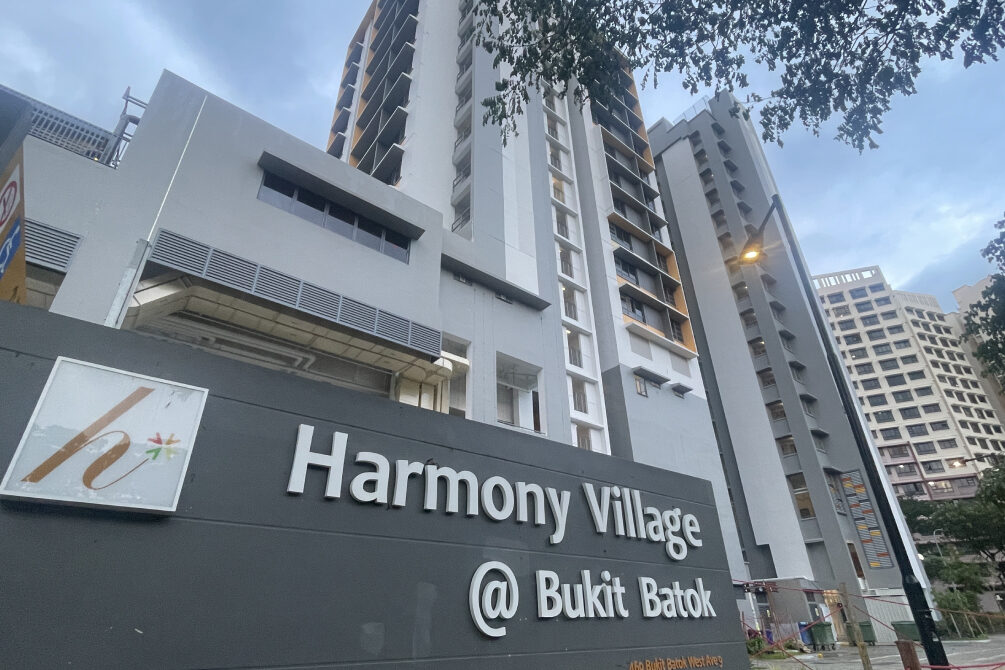
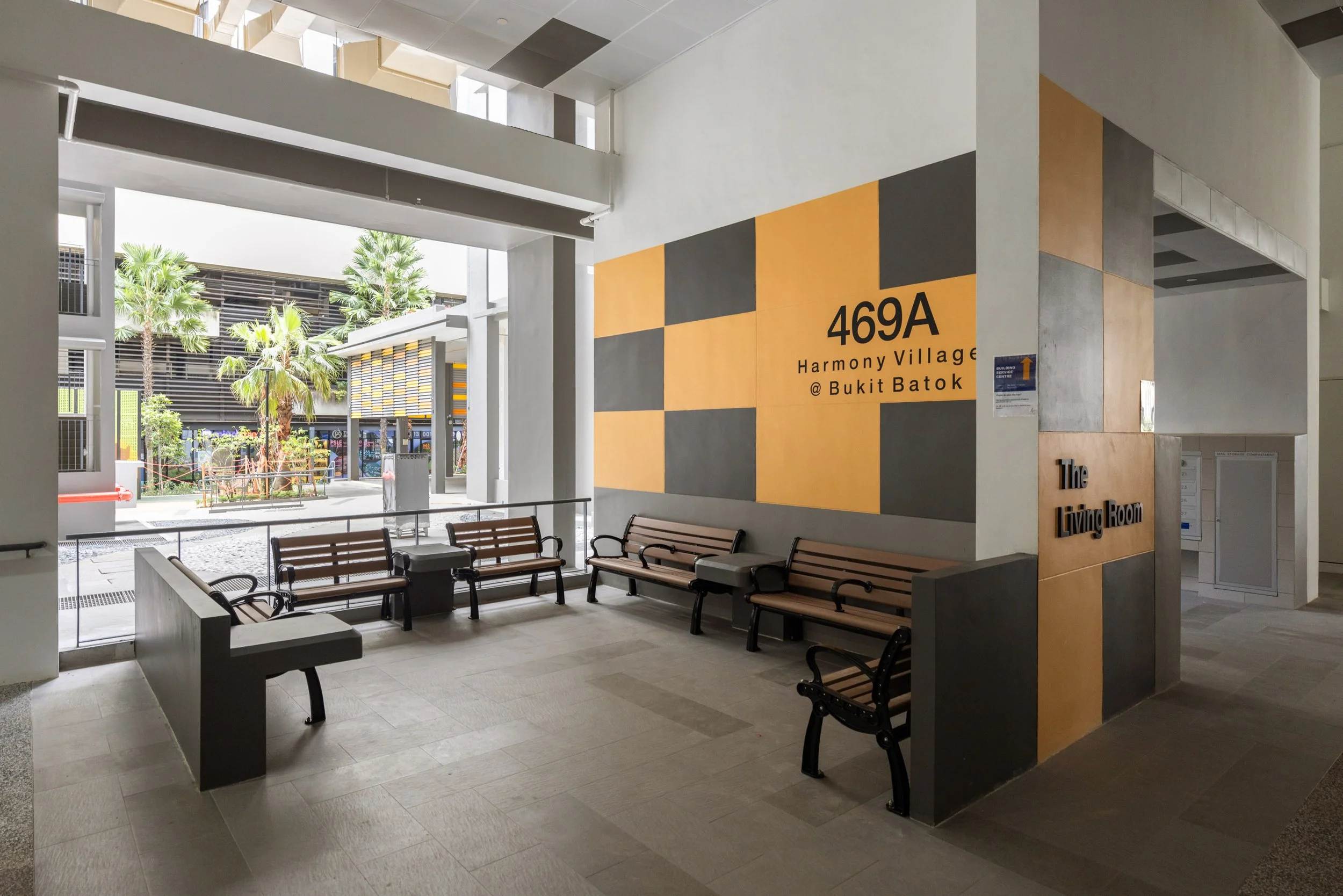
Harmony Village @ Bukit Batok
By 2030, one in four Singaporeans will be 65 or older — yet the infrastructure of care has not kept pace. At Harmony Village, a community care apartment in Bukit Batok, this tension becomes achingly tangible.
Harmony Village is designed to let elderly residents age in place — staying independent in familiar surroundings while receiving support as needed. The community features communal dining areas, family visitation spaces, a garden, fitness stations, and senior-friendly units with ramps and grab bars. On paper, it is a model of compassionate design. In practice, the system is under enormous strain.
Understaffing Issue
A single staff member is responsible for monitoring 189 residents — tracking activities, checking in on wellbeing, and responding to incidents. No one person can do this safely without technological support.
Manual Monitoring Only
Monitoring is done entirely by hand — paper logs, verbal check-ins, walking rounds. No automated alerts, no sensor feeds, no AI assistance. Vital signs and behavioural changes go untracked between visits.
Early Dementia Undetected
Mild cognitive impairment presents through subtle behavioural shifts — disrupted sleep, changed routines, social withdrawal. Without continuous passive sensing, these signals stay invisible until a crisis occurs.
This is the problem your teams will tackle over four days
Design sensor-integrated conversational agents that give care staff superpowers — surfacing meaningful alerts without noise, enabling proactive outreach to at-risk residents, and keeping families reassured — all without overwhelming the monitor with more screens to watch.
What we are building together
This hackathon integrates live sensor data into conversational agents that improve collaboration among clients (elderly residents, family carers), monitors (healthcare professionals, social care staff) and AI — without overloading the monitors.
Core aim
Sensor-integrated chatbots that improve wellbeing collaboration across clients, monitors, and AI — without monitor overload.
Technical context
Build on conversational-care.ai, Home Assistant, Vayyar radar sensors, and Aqara community API. Real data, real environments.
Collaboration
ICL (3 groups, ~15 people) and NUS (1 group, ~6 people) in mixed cross-institutional teams of 5, bridging design engineering and AI.
Four-day facilitator roadmap
All times shown in UK Time (SGT = UKT + 7 hrs). Day 1 is the most facilitated; subsequent days shift to team autonomy.
Day 1
Dyson Building Boardroom — Full Facilitation Day
| Time (UKT) | SGT | Activity | Leads |
|---|---|---|---|
| 10:00–10:20 | 17:00 | Welcome & framing (Rafa + Kate) | Organizers |
| 10:20–11:00 | 17:20 | Team introductions (2 min each) | All |
| 11:00–11:15 | 18:00 | Hansoo Lee: Wearable Sensor-based Sensei Project | ICL |
| 11:15–11:30 | 18:15 | Henry, Dhaaniya, Terra: Kampung Care Project | NUS |
| 11:30–11:40 | 18:30 | Marco: Minder Chat demo & lessons | ICL |
| 11:40–12:00 | 18:40 | Pablo: conversational care platform | ICL |
| 12:00–13:00 | 19:00 | Day 2 planning & team formation | All |
| 13:00–14:00 | 20:00 | 🍽 Lunch / Dinner break | — |
| 14:00–16:00 | 21:00 | 🔑 AI for Empathy & Design Thinking Workshop (Kate + Lihong) | NUS facilitation |
| 16:00–17:00 | 23:00 | Prototype sketches + prioritisation per group | Teams |
Each group of 5 exits with: (1) an empathy-mapped user profile, (2) a prioritised list of sensor-integrated chatbot features, and (3) a rough sketch of their prototype concept.
Day 2
Implementation Day — Teams work independently
Teams channel open all day for cross-site collaboration. Suggested prototype tracks:
Track A
Dashboard for elderly social care monitor — Vayyar/Aqara sensor alerts (with NUS team)
Track B
Dashboard for health coach monitoring Sensei wearable sensor data
Track C
Multidisciplinary team agent — collaborative AI around sensor data and alerts
Day 3
Async sprint — Teams continue building
Channel open for questions. Some ICL members have a separate event. Teams finalise prototypes and prepare Day 4 presentations. Facilitators available asynchronously.
Day 4
10:00–13:00 UKT (17:00–20:00 SGT) — Online presentations
Each team: 5 min demo + 5 min feedback. Deliverables: working (or Wizard-of-Oz) prototype, sensor integration diagram, and reflection on monitor load.
Building cognitive empathy for Harmony Village
This 2-hour workshop helps ICL and NUS students develop cognitive empathy for Harmony Village's elderly residents, family carers, and frontline staff. AI drives divergent exploration; human judgment provides depth and validation.
Cognitive empathy
"I put myself in your shoes." Rationally understanding another's feelings and thoughts. The primary goal of this workshop.
Affective empathy
"I feel with you." Experiencing the feelings of another. Emerges through immersive role-play and persona embodiment.
Compassionate empathy
"I want to help." The drive to act. The prototype itself should embody this form — design as care.
Workshop phase rundown
| Time | Phase | Activity | AI Tools | Harmony Village focus |
|---|---|---|---|---|
| 10 min | Framing | Mini-lecture: "AI, design thinking & human-AI validation loop." Show Uncle Ong's profile. | — | Introduce residents + staff as real people, not abstractions. |
| 15 min | 1. Discover | Activity 1 — Role-play with AI. Each student selects a Harmony Village stakeholder and interviews an AI playing that persona. | ChatGPT, Gemini, DeepSeek | Roles: resident with early dementia; adult child carer in Malaysia; night-shift care aide; physiotherapist; remote GP. |
| 15 min | 2. Define | Activity 2 — Persona generation. AI-generated visual persona + edge-case "provotype" to surface rarely-discussed struggles. | ChatGPT, Gemini, Dall-E, Adobe Firefly | General persona + one edge case (e.g., resident with hearing impairment AND digital distrust). |
| 15 min | 3. Develop | Activity 3 — Idea generation. Persona-driven AI brainstorm. Keep-Modify-Discard framework filters ideas. | Ideanote, Notion, ChatGPT | Constraint: each idea must reference one sensor data stream and one communication channel. |
| 15 min | 4. Deliver | Activity 4 — Rapid prototype. Sensory moodboard or UI sketch using AI generators. | Google Stitch, Figma Make, Canva, Adobe Firefly | Prototype must show the client–monitor–AI triangle: who sees what, and how is overload prevented? |
| 10 min | Reflection | Group share-out: what did AI role-play reveal? What assumptions did the edge-case expose? | — | Facilitator probe: "What would this alert feel like to the resident at 3am?" |
Harmony Village role-play personas
Print one card per person or display on screen. Students use these to frame their AI role-play prompts in Activity 1.
Uncle Ong, 79
Resident · Harmony Village CCA
Daily reality
- Lives alone in a studio apartment
- Mild cognitive decline; early dementia
- Occasional falls at night
- Landline only; no smartphone
Goals & pain points
- Maintain independence & dignity
- Not feel "watched" or patronised
- Forgets medication timings
- Anxious after night-time alerts bring staff
Nurul, 42 — Night-shift Care Aide
Harmony Village staff · 9pm–6am shift
Daily reality
- Responsible for 189 residents alone
- ~30 sensor alerts per shift
- Tablet-based incident logging
- English is second language (Malay first)
Goals & pain points
- Reduce false alarm fatigue
- Clear handover to day shift
- Logging takes 20 min per incident
- Difficult to escalate under uncertainty
Sarah, 48 — Distant Family Carer
Uncle Ong's daughter · Based in Kuala Lumpur
Daily reality
- Weekly video call with father
- Full-time work; two school-age children
- Relies on Harmony Village staff for updates
Goals & pain points
- Too many WhatsApp messages from staff
- Hard to tell urgent vs. routine alerts
- Feels excluded from care decisions
Dr Ramesh, 55 — Remote GP
Medical monitor · Reviews 40+ residents
Daily reality
- Checks dashboards 2× per day
- Prescribes remotely; visits monthly
- Works across 3 care facilities
Goals & pain points
- Dashboard shows raw data, not clinical context
- No clear AI-to-human handoff logic
- Wants historical trend vs. today's reading
Harmony Village AI prompts for each activity
Copy these directly into ChatGPT, Gemini, or DeepSeek. Each prompt is scoped to the Harmony Village context and structured to elicit cognitively rich responses.
Activity 1 — Discover (role-play)
I am designing a sensor-integrated care chatbot for Harmony Village, a Community Care Apartment in Singapore. Assuming you are Uncle Ong — a 79-year-old resident with early dementia who lives alone — I have some questions.
1. Tell me about a night when you felt anxious or confused. What happened?
2. When does the sensor or care system make you feel watched or embarrassed?
3. If a chatbot could help your daughter in KL understand how you are doing, what should it tell her — and what should it never tell her?
Activity 2 — Define (edge case persona)
I am designing for Harmony Village elderly residents. Generate an edge-case persona — a resident who struggles with our AI monitoring system for a reason that is rarely discussed in mainstream aging care design. Give them a name, age, background, and 3 specific pain points. Then describe what a system designed specifically for them would require that a general design would miss.
Activity 3 — Develop (monitor-load-aware ideation)
Given Nurul's persona [paste persona], generate 5 chatbot ideas or dashboard features that would help her manage sensor alerts on the night shift. For each idea, specify: (a) what it shows, (b) what it actively hides to reduce noise, and (c) how the resident's autonomy is preserved. Apply Keep-Modify-Discard to your own list before presenting it.
Activity 4 — Deliver (contextual prototype)
Visualise a WhatsApp chatbot interface for Sarah (Uncle Ong's daughter in KL). Show a weekly wellbeing summary message that: uses plain, warm language; includes one sensor-derived insight (e.g., sleep quality trend); includes a clear escalation option; and ends with one question that invites Sarah to respond. Show the full message thread, including Sarah's reply.
What makes a successful hackathon prototype
Six dimensions for evaluating and giving feedback on Day 4 prototype presentations.
Sensor integration
Does the prototype use real or simulated Vayyar/Aqara data? Is raw data transformed into human-readable information?
Monitor load reduction
Can the team explain what the system does NOT alert the monitor to? Is triage logic explicit and justifiable?
Client dignity
Does the resident have any control over what data is shared and with whom? Is privacy by design considered?
Empathy fidelity
Can the team trace design decisions back to a specific persona insight from the workshop? No insight = no grounding.
Channel appropriateness
Is the chosen channel (WhatsApp, web, voice) right for the specific user? Does it match their tech literacy and context?
AI–Human loop clarity
Is it clear when AI decides, when the human decides, and how the human can override? Explainability is non-optional in care.
Prototypes that demonstrably integrate ICL technical contributions (conversational-care.ai, Minder Chat patterns) with NUS sensor data and design insights will be highlighted as exemplary collaborative outputs.
Technical resources for teams
Core platform
conversational-care.ai — Pablo's platform. Set up before Day 2. Provides the WhatsApp/web chatbot backbone. Tutorial from ICL on Day 1.
Sensor hardware
Vayyar.com — radar-based fall detection. Aqara — community sensor API for motion, door, temperature. NUS team responsible for data export.
Design & AI tools
ChatGPT, Gemini, DeepSeek for role-play; Ideanote/Notion for ideation; Google Stitch, Figma Make, Adobe Firefly for prototyping; Dall-E for visuals.
Collaboration
Microsoft Teams channel open continuously from Day 2. Miro board for shared workshop activities (link provided on Day 1). All async coordination through Teams.
Who's in the room
30 participants across ICL and NUS, organised by institution and project track.
ICL — 3 groups
Organisers
- Rafael Calvo · ICL Dyson School of Design Engineering
- Pablo Fonseca
- Marco Da Re
Talking to Wearables
- Hansoo Lee
- Baargavi
- Minseo Cho
- Zheyuan Zhang
- JingYang
- Rongqi
Talking to Home
- Jasmicaa Ganesan
- Haseen
- Shihan Li
- Valerie Chua Yan Tong
- Payal Chand
Talking to Others
- Sarah Alharbi
- Yiwen
- Ruwen
- Katie
- Yujeong Seo
- Yao
- Raquel
NUS — 1 group
Facilitators
- Kate Sangwon Lee · NUS College of Design & Engineering
- Lihong Idris Lim · NUS College of Design & Engineering
Mentors — NUS Alice Lee Centre for Nursing Studies
- Wang Wenru · NUS Alice Lee Centre for Nursing Studies
- Jiang Ying · NUS Alice Lee Centre for Nursing Studies
Home Sensor
- Dhaaniya Sree Ramesh · Bio Medical Engineering
- Lee Qi Zhen Terra · Industrial Design
- Lim Zhu Heng Henry · Architecture
- Givson Ong · Industrial Design
- Badrinath Sandhya · Electrical Engineering
Team prototypes & demos
Explore what each team built over four days — live prototypes, dashboards, and presentation recordings.
NUS — Home Sensor
Kampung Care
ICL — Talking to Wearables
Sensei
Links coming soon…
ICL — Talking to Home
Homies
Links coming soon…
ICL — Talking to Others
Hoopoes
Links coming soon…
Important links
NUS UX Lab
Human-Centered AI Design (HCAID) — Principal Investigator: Dr. Kate Sangwon Lee
blog.nus.edu.sg/uxlab
ICL Wellbeing Technologies Lab
Positive Computing — Imperial College London, Dyson School of Design Engineering — Principal Investigator: Dr. Rafael Calvo
positivecomputing.org/lab.html
Miro Board & Workshop Resources
Shared AI for Empathy workshop board, slides, and AI Opportunity Cards — use for Activities 1–4 and collaborative ideation
Teams Meeting Link
Cross-site video call for ICL (London) and NUS (Singapore) — open from Day 1 onwards
Join Teams meeting →